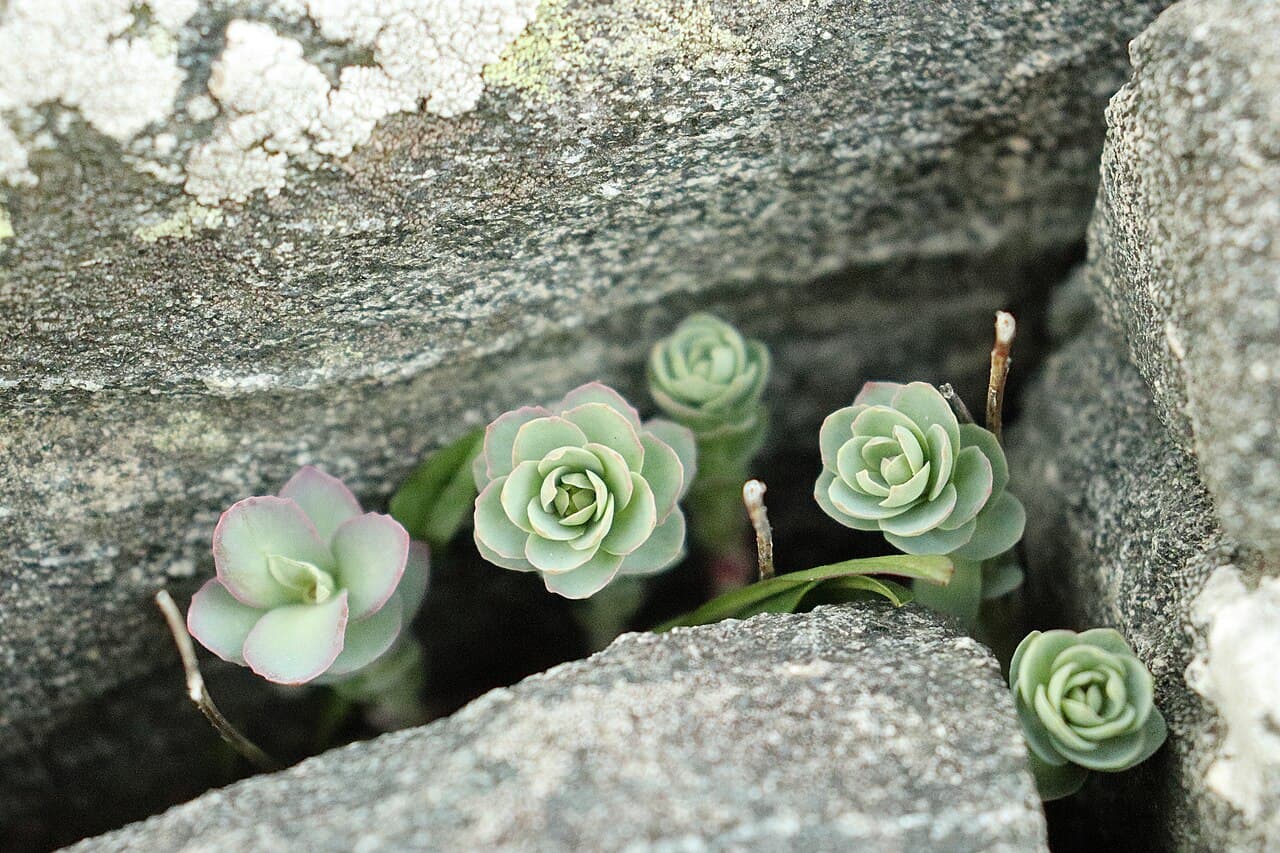
Root and rhizome extracts from more than one Rhodiola species. R. rosea and R. crenulata are not interchangeable, and a Chinese factory does not prove the plants were grown in China.
Rhodiola rosea in flower. Extracts discussed on this page use root and rhizome. Rhodiola crenulata is a different species and is not shown here. Photograph by Marius Vassnes, CC BY-SA 4.0, via Wikimedia Commons.
Rhodiola ingredients are sold under one common name from more than one species. Rhodiola rosea and Rhodiola crenulata are the two most often named in trade. They are not interchangeable. A specification that reports only salidroside does not identify the species. Rosavins are discussed mainly for R. rosea profiles and are not a shortcut around species identification.
The usual plant part is the root and rhizome. An isolated high-purity salidroside is a different article from a root extract standardised to a modest percentage.
R. crenulata is a high-elevation plant recorded in Tibet, western Sichuan, northwest Yunnan, Qinghai, and neighbouring Himalayan countries. Public trade commentary says most Rhodiola material in commerce is wild-collected, and that Chinese extractors also draw rhizomes from other countries. Wild origin, cultivated origin, and imported rhizomes have to be evidenced separately. A Chinese factory address does not establish Chinese cultivation.
Public database references
Reference molecules describe chemical identity, not the composition, purity, origin, or safety of a supplier’s extract. These automated lookups do not change supplier rankings.
Search terms: rhodiola. 2 matching recall records in the available dataset, including historical and terminated recalls. Retrieved 2026-11-15. Source dataset updated 2026-11-04.
Matches can include finished foods and multi-ingredient products. They do not establish that this ingredient caused a recall or that any listed supplier was involved. No matches does not mean an ingredient or supplier is safe.
Rhodiola crenulata (Hook. f. et Thoms.) H. Ohba is the species named for the traditional drug Hongjingtian (root and rhizome) in a Hong Kong Baptist University medicinal-plant record.
Rhodiola rosea is a different species. Do not substitute a rosavin specification for a crenulata specification, or the reverse.
Plant part
Root and rhizome. Aerial parts are a different article and are not assumed equivalent.
Common grades and distinctions
Species: R. rosea versus R. crenulata versus other Rhodiola species.
Marker set: salidroside alone versus a profile that also reports rosavins or other compounds.
Crude extract versus a highly purified isolated compound.
Wild-collected versus cultivated, which changes both the evidence needed and the sustainability questions a brand has to ask.
Listing status
No confirmed offering is listed. A confirmed row needs evidence of plant extraction, Chinese cultivation, Chinese manufacturing, and a manufacturing site tied to that grade.
Confirmed comparison
Confirmed offerings are plant-extracted, with reviewed evidence of Chinese cultivation, Chinese manufacturing, and an identified manufacturing site for that grade. Sorted by the exact transparency score, then by supplier and grade name.
No offering is in the confirmed ranking. A row is added only when the evidence covers that grade. An empty table is not a claim that no manufacturer exists.
Sample and quote requests stay closed until a confirmed offering is listed. You can still tell CleanIngredients what you need.
Require a species name on the specification and an identity method that can tell R. rosea from R. crenulata. Salidroside percentage alone is not that method.
Ask where the plants grew, and whether the lot is wild, cultivated, or mixed. A map of the genus is not a lot record.
Ask which site extracted this grade. Extractors in China are reported to process rhizomes that were grown in other countries.
Treat CITES and national wild-collection rules as a buying question. This directory does not determine whether a shipment is legal to export or import.
Fermented, synthetic, or mixed-route articles are out of scope.
No Rhodiola offering is in the confirmed ranking. Public sources reviewed on 14 November 2026 did not tie a named grade to Chinese cultivation and to the site that manufactures that grade.
Compare the legal seller and actual plant, the exact grade and assay basis, botanical growing origin, manufacturing origin, and sample-lot documents separately. A company description is not confirmation of a grade or available stock.
Research lead · Not confirmed
Huisong Pharmaceuticals
Hangzhou, Zhejiang, China (company location; grade-specific plant unconfirmed)
The product page names Rhodiola rosea, root/stem, HPLC marker specifications, and a botanical extraction sequence.
Still needed: The offered grade’s botanical growing country, exact manufacturing site, lot-specific identity evidence, and current certificates. The page’s organic claims have not been independently authenticated.
The dried root and rhizome of Rhodiola crenulata (Hook. f. et Thoms.) H. Ohba. (Crassulaceae).
Useful for species and plant part: Hongjingtian in this record is R. crenulata root and rhizome, with production regions named as Tibet, Sichuan, and Yunnan. That is a pharmacopoeial identity statement, not evidence that any commercial extract is grown or manufactured at a named site.
探秘高原“红宝石”——大花红景天的奥秘Northwest Institute of Plateau Biology, Chinese Academy of Sciences · checked 2026-11-14
Translation: Rhodiola crenulata is mainly distributed in the high mountains of Tibet, northwest Yunnan, western Sichuan, Qinghai, and similar areas of China, at elevations from 2,800 to 5,600 metres.English rendering of the distribution sentence. The page also notes records in Nepal, Sikkim, and Bhutan.
This is a species-distribution article, not a supplier dossier. It supports where the plant can grow. It does not document a cultivation enterprise or a manufacturing site for an extract grade.
Both commercial demand and the location of extract manufacturers in China attracts cross-border trade in raw Rhodiola rhizomes, mainly from the Russian Federation but also from Mongolia and Kazakhstan.
The proposal says most traded Rhodiola material is wild-sourced, and that Chinese extract manufacturers draw raw rhizomes across borders. A Chinese factory address therefore does not establish Chinese cultivation. No named grade is listed from this document.